Where the translations differ
Wilson and Fagles are both inviting modern choices, but they solve different problems. Wilson sets a firm pentameter line and keeps one English line for each Greek line. Fagles uses expansive free verse, so a phrase or speech has room to gather force. We can hear the contrast in the opening. Wilson defines Odysseus with one sharp adjective, while Fagles turns his character into a pattern of motion.
The Cyclops scene narrows the difference because both translators want an English listener to follow the joke. The reunion opens it again. Wilson reaches the physical release quickly. Fagles enlarges the emotional proof and surrender. Choose Wilson when momentum, contemporary clarity, and formal consistency matter most. Choose Fagles when you want the poem to sound public, dramatic, and large. Neither one is always “more faithful.” Wilson follows the Greek line count more strictly, while Fagles often expands to capture the force of a scene.
Three passages, side by side
Showing Wilson and Fagles. Select more to add them to the comparison.
Book 1, opening invocation
The opening lines and polytropos
Tell me about a complicated man. Muse, tell me how he wandered and was lost when he had wrecked the holy town of Troy, and where he went, and who he met, the pain he suffered in the storms at sea, and how he worked to save his life and bring his men back home. He failed to keep them safe; poor fools, they ate the Sun God’s cattle, and the god kept them from home. Now goddess, child of Zeus, tell the old story for our modern times. Find the beginning.W. W. Norton & Company first-edition ebook (2018) · Book 1, opening invocation Text checked Jul 15, 2026
Sing to me of the man, Muse, the man of twists and turns driven time and again off course, once he had plundered the hallowed heights of Troy. Many cities of men he saw and learned their minds, many pains he suffered, heartsick on the open sea, fighting to save his life and bring his comrades home. But he could not save them from disaster, hard as he strove — the recklessness of their own ways destroyed them all, the blind fools, they devoured the cattle of the Sun and the Sungod wiped from sight the day of their return. Launch out on his story, Muse, daughter of Zeus, start from where you will —sing for our time too.Penguin Books electronic edition (2002; translation first published 1996) · Book 1, opening invocation Text checked Jul 15, 2026
Pick any translation above and we’ll put it beside this one.
The poem begins by asking us what kind of man Odysseus is. Wilson calls him “complicated,” Fagles gives him “twists and turns,” Lattimore “many ways,” Mendelsohn “roundabout ways,” and Green and Rieu “resourceful.” Each choice makes a different promise about the hero. Fitzgerald brings the invocation inside the poet with “Sing in me.” Lombardo, Butler, the Pope collaboration, and Chapman lean instead toward cunning, ingenuity, or wisdom. We should listen to the line length too. Before the plot begins, we can already hear compression, swing, and ceremony.
Book 9, the name given to Polyphemus
The Cyclops and the “Nobody” wordplay
‘Cyclops, you asked my name. I will reveal it; then you must give the gift you promised me, of hospitality. My name is Noman. My family and friends all call me Noman.’ He answered with no pity in his heart, ‘I will eat Noman last; first I will eat the other men. That is my gift to you.’ Then he collapsed, fell on his back, and lay there, his massive neck askew. All-conquering sleep took him. In drunken heaviness, he spewed wine from his throat, and chunks of human flesh.W. W. Norton & Company first-edition ebook (2018) · Book 9, false-name exchange and aftermath Text checked Jul 15, 2026
‘So, you ask me the name I’m known by, Cyclops? I will tell you. But you must give me a guest-gift as you’ve promised. Nobody —that’s my name. Nobody — so my mother and father call me, all my friends.’ But he boomed back at me from his ruthless heart, ‘Nobody? I’ll eat Nobody last of all his friends — I’ll eat the others first! That’s my gift to you!’ With that he toppled over, sprawled full-length, flat on his back and lay there, his massive neck slumping to one side, and sleep that conquers all overwhelmed him now as wine came spurting, flooding up from his gullet with chunks of human flesh —he vomited, blind drunk.Penguin Books electronic edition (2002; translation first published 1996) · Book 9, false-name exchange and aftermath Text checked Jul 15, 2026
Pick any translation above and we’ll put it beside this one.
The joke works only if a translator finds an English non-name that holds up in dialogue. Wilson, Lombardo, Butler, and the Pope text give us “Noman.” Fagles, Lattimore, Green, and the revised Rieu use “Nobody.” Fitzgerald makes the disguise visible as “Nohbdy,” Mendelsohn hyphenates “No-One,” and Chapman chooses “No-Man.” Before Polyphemus's neighbors even answer, that one choice tells us whether the trick will feel conversational, antique, conspicuous, or immediate.
Book 23, Penelope's recognition after the bed test
The olive-tree bed reunion
At that, her heart and body suddenly relaxed. She recognized the tokens he had shown her. She burst out crying and ran straight towards him and threw her arms around him, kissed his face, and said, “Do not be angry at me now, Odysseus! In every other way you are a very understanding man. The gods have made us suffer: they refused to let us stay together and enjoy our youth until we reached the edge of age together.W. W. Norton & Company first-edition ebook (2018) · Book 23, recognition and reunion after the bed test Text checked Jul 15, 2026
Penelope felt her knees go slack, her heart surrender, recognizing the strong clear signs Odysseus offered. She dissolved in tears, rushed to Odysseus, flung her arms around his neck and kissed his head and cried out, “Odysseus —don’t flare up at me now, not you, always the most understanding man alive! The gods, it was the gods who sent us sorrow — they grudged us both a life in each other’s arms from the heady zest of youth to the stoop of old age.Penguin Books electronic edition (2002; translation first published 1996) · Book 23, recognition and reunion after the bed test Text checked Jul 15, 2026
Pick any translation above and we’ll put it beside this one.
In the Greek, Penelope's knees and heart give way together when she recognizes Odysseus. Each translator decides how literally to keep those two bodily signs and how much psychology to add. Lattimore, Mendelsohn, Green, and Chapman keep both signs close to the surface. Wilson gives us a sudden relaxation, Fagles adds surrender, Fitzgerald says her heart fails, Lombardo says she “finally let go,” and the prose versions describe a breakdown or melting. Pope takes us furthest into eighteenth-century melodrama, with trembling and fainting.
Which one should you read?
Readers who value clarity, pace, and a consistent poetic form.
Wilson's regular pentameter and compact syntax keep the story clear without giving up verse. Her interpretations arrive quickly, so there is less distance between the reader and the action.
Readers who value grandeur, drama, and performance.
Fagles gives speeches and moments of recognition more room to build. The result is an English epic with a larger speaking voice, but with a looser relationship between each Greek and English line.
Find the exact editions
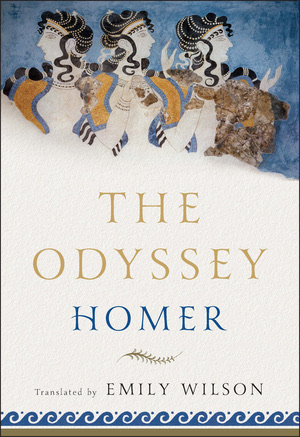
Exact edition
The Odyssey
- Publisher
- W. W. Norton
- Format
- Paperback
- ISBN-10
- 0393356256
- ISBN-13
- 9780393356250
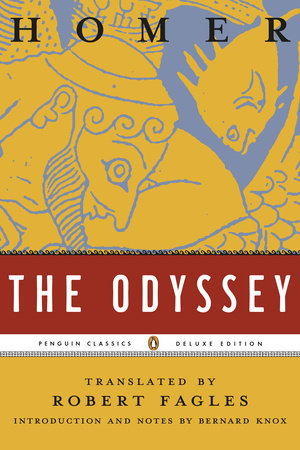
Exact edition
The Odyssey (Penguin Classics Deluxe Edition)
- Publisher
- Penguin Classics
- Format
- Paperback
- ISBN-10
- 0140268863
- ISBN-13
- 9780140268867