We compared how eleven English versions handle the same three passages: the opening lines, the Cyclops, and the reunion. We also separated translation dates from the editions you can actually buy.
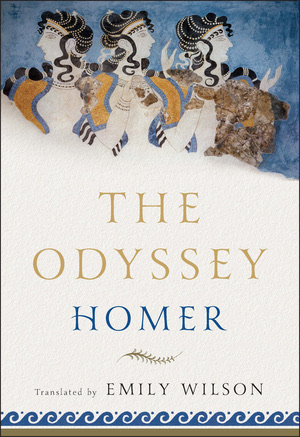
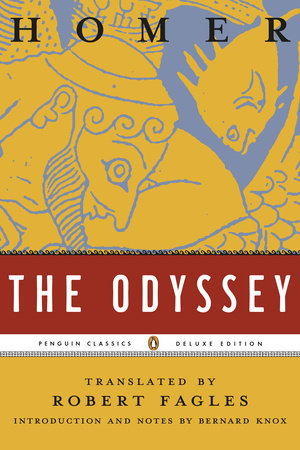
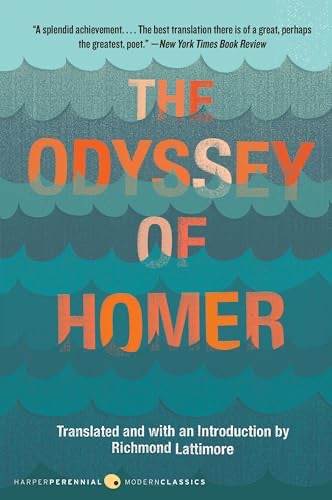
For a first reading, we recommend Emily Wilson. Her direct syntax and quick, controlled line let you enter the poem without turning it into prose. Choose Fagles for speeches that fill a room, Lattimore when you want to hear Greek structure pressing on the English, and Butler when you need a free, complete prose version.
These are answers for different readers, not places on a podium. We use the same three passages to show why. The opening defines the hero, the Cyclops scene tests verbal timing, and the reunion shows how each translator handles physical and emotional recognition.
Choose a moment, then pick the translations you want to hear together. If you choose several, scroll sideways to keep reading.
Show translations
Showing Wilson, Fagles, and Fitzgerald. Select more to add them to the comparison.
Book 1, opening invocation
The opening lines and polytropos
Emily Wilson2017 · Verse
Tell me about a complicated man.
Muse, tell me how he wandered and was lost
when he had wrecked the holy town of Troy,
and where he went, and who he met, the pain
he suffered in the storms at sea, and how
he worked to save his life and bring his men
back home. He failed to keep them safe; poor fools,
they ate the Sun God’s cattle, and the god
kept them from home. Now goddess, child of Zeus,
tell the old story for our modern times.
Find the beginning.
W. W. Norton & Company first-edition ebook (2018) · Book 1, opening invocationText checked Jul 15, 2026Robert Fagles1996 · Verse
Sing to me of the man, Muse, the man of twists and turns
driven time and again off course, once he had plundered
the hallowed heights of Troy.
Many cities of men he saw and learned their minds,
many pains he suffered, heartsick on the open sea,
fighting to save his life and bring his comrades home.
But he could not save them from disaster, hard as he strove —
the recklessness of their own ways destroyed them all,
the blind fools, they devoured the cattle of the Sun
and the Sungod wiped from sight the day of their return.
Launch out on his story, Muse, daughter of Zeus,
start from where you will —sing for our time too.
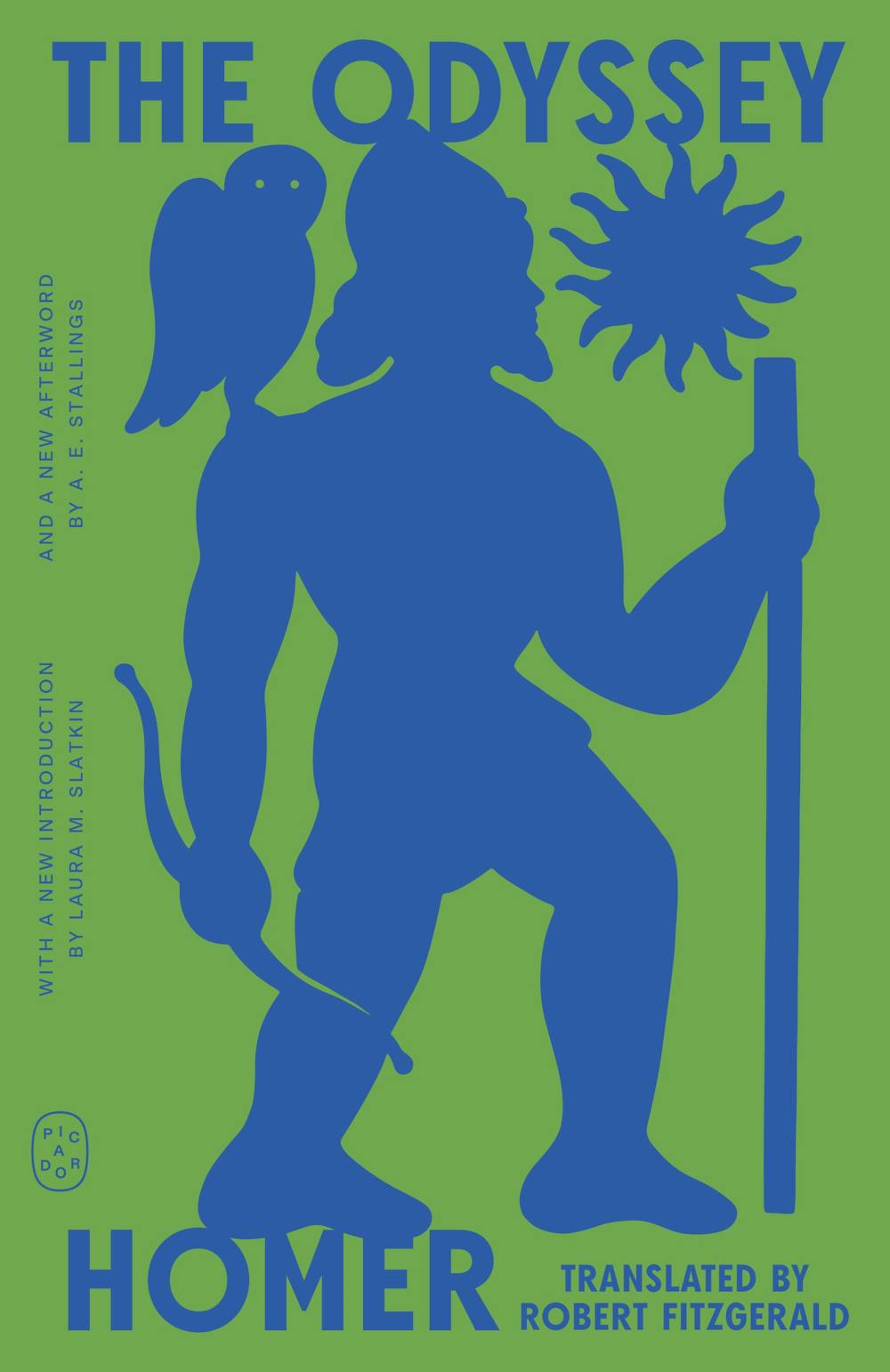
Penguin Books electronic edition (2002; translation first published 1996) · Book 1, opening invocationText checked Jul 15, 2026Robert Fitzgerald1961 · Verse
Sing in me, Muse, and through me tell the story
of that man skilled in all ways of contending,
the wanderer, harried for years on end,
after he plundered the stronghold
on the proud height of Troy.
He saw the townlands
and learned the minds of many distant men,
and weathered many bitter nights and days
in his deep heart at sea, while he fought only
to save his life, to bring his shipmates home.
But not by will nor valor could he save them,
for their own recklessness destroyed them all—
children and fools, they killed and feasted on
the cattle of Lord Hêlios, the Sun,
and he who moves all day through heaven
took from their eyes the dawn of their return.
Of these adventures, Muse, daughter of Zeus,
tell us in our time, lift the great song again.
Farrar, Straus and Giroux ebook (2011; 1998 edition of the 1961 translation) · Book 1, opening invocationText checked Jul 15, 2026E. V. Rieu1946 · Prose
Tell me, Muse, the story of that resourceful man who was driven to wander far and wide after he had sacked the holy citadel of Troy. He saw the cities of many people and he learnt their ways. He suffered great anguish on the high seas in his struggles to preserve his life and bring his comrades home. But he failed to save those comrades, in spite of all his efforts. It was their own transgression that brought them to their doom, for in their folly they devoured the oxen of Hyperion the Sun-god and he saw to it that they would never return. Tell us this story, goddess daughter of Zeus, beginning at whatever point you will.
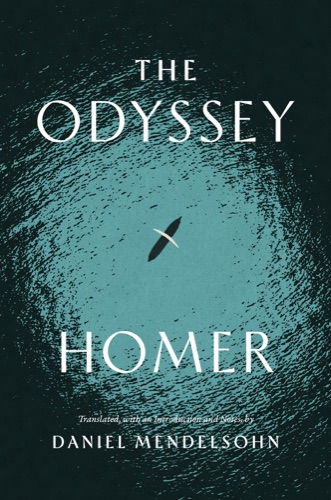
Penguin ebook (2010) of D. C. H. Rieu's 1991 revision, reissued in 2003 · Book 1, opening invocationText checked Jul 15, 2026Daniel Mendelsohn2025 · Verse
Tell me the tale of a man, Muse, who had so many roundabout ways
To wander, driven off course, after sacking Troy’s hallowed keep;
Many the peoples whose cities he saw and whose ways of thinking he learned,
Many the toils he suffered at sea, anguish in his heart
As he struggled to safeguard his life and the homecoming of his companions.
But he did not save his companions even so, though he longed to,
For their heedlessness destroyed them, theirs and nobody else’s—
Fools that they were, like children, who devoured the sun-god Hyperion’s
Cattle, and so he took from them the day of their homecoming.
Goddess, start where you will; daughter of Zeus, share the tale with us too.
University of Chicago Press ebook (2025) · Book 1, opening invocationText checked Jul 15, 2026Richmond Lattimore1965 · Verse
Tell me, Muse, of the man of many ways, who was driven
far journeys, after he had sacked Troy's sacred citadel.
Many were they whose cities he saw, whose minds he learned of,
many the pains he suffered in his spirit on the wide sea,
struggling for his own life and the homecoming of his companions.
Even so he could not save his companions, hard though
he strove to; they were destroyed by their own wild recklessness,
fools, who devoured the oxen of Helios, the Sun God,
and he took away the day of their homecoming. From some point
here, goddess, daughter of Zeus, speak, and begin our story.
HarperCollins ebook (2009; translation copyright 1965 and 1967) · Book 1, opening invocationText checked Jul 15, 2026Stanley Lombardo2000 · Verse
SPEAK, MEMORY— Of the cunning hero,
The wanderer, blown off course time and again
After he plundered Troy’s sacred heights.
Speak
Of all the cities he saw, the minds he grasped,
The suffering deep in his heart at sea
As he struggled to survive and bring his men home
But could not save them, hard as he tried—
The fools—destroyed by their own recklessness
When they ate the oxen of Hyperion the Sun,
And that god snuffed out their day of return.
Of these things,
Speak, Immortal One,
And tell the tale once more in our time.
Hackett The Essential Odyssey ebook (2007), an abridgment of the 2000 translation · Book 1, opening invocationText checked Jul 15, 2026Peter Green2018 · Verse
The man, Muse—tell me about that resourceful man, who wandered
far and wide, when he’d sacked Troy’s sacred citadel:
many men’s townships he saw, and learned their ways of thinking,
many the griefs he suffered at heart on the open sea,
battling for his own life and his comrades’ homecoming. Yet
no way could he save his comrades, much though he longed to—
it was through their own blind recklessness that they perished,
the fools, for they slaughtered the cattle of Hēlios the sun god
and ate them: for that he took from them their day of returning.
Tell us this tale, goddess, child of Zeus; start anywhere in it!
University of California Press ebook (2018) · Book 1, opening invocationText checked Jul 15, 2026Alexander Pope1725-1726 · Verse
The man for wisdom's various arts renown'd,
Long exercised in woes, O Muse! resound;
Who, when his arms had wrought the destined fall
Of sacred Troy, and razed her heaven-built wall,
Wandering from clime to clime, observant stray'd,
Their manners noted, and their states survey'd,
On stormy seas unnumber'd toils he bore,
Safe with his friends to gain his natal shore:
Vain toils! their impious folly dared to prey
On herds devoted to the god of day;
The god vindictive doom'd them never more
(Ah, men unbless'd!) to touch that natal shore.
Oh, snatch some portion of these acts from fate,
Celestial Muse! and to our world relate.
Excerpt credit: Elijah Fenton, revised by Alexander PopeMunsey's electronic text (2002) of the 1725–1726 collaborative translation · Book 1, opening invocationText checked Jul 15, 2026Samuel Butler1900 · Prose
Tell me, O Muse, of that ingenious hero who travelled far and wide after he had sacked the famous town of Troy. Many cities did he visit, and many were the nations with whose manners and customs he was acquainted; moreover he suffered much by sea while trying to save his own life and bring his men safely home; but do what he might he could not save his men, for they perished through their own sheer folly in eating the cattle of the Sun-god Hyperion; so the god prevented them from ever reaching home. Tell me, too, about all these things, oh daughter of Jove, from whatsoever source you may know them.
The Man, O Muse, inform, that many a way
Wound with his wisdom to his wished stay;
That wandered wondrous far, when he the town
Of sacred Troy had sack’d and shivered down;
The cities of a world of nations,
With all their manners, minds, and fashions,
He saw and knew; at sea felt many woes,
Much care sustained, to save from overthrows
Himself and friends in their retreat for home;
But so their fates he could not overcome,
Though much he thirsted it. O men unwise,
They perish’d by their own impieties,
That in their hunger’s rapine would not shun
The oxen of the lofty-going Sun,
Who therefore from their eyes the day bereft
Of safe return. These acts, in some part left,
Tell us, as others, deified seed of Jove.
Wordsworth Editions ebook (2012) of Chapman's Homer · Book 1, opening invocationText checked Jul 15, 2026
Select another translation to compare against.
Pick any translation above and we’ll put it beside this one.
What to notice
The poem begins by asking us what kind of man Odysseus is. Wilson calls him “complicated,” Fagles gives him “twists and turns,” Lattimore “many ways,” Mendelsohn “roundabout ways,” and Green and Rieu “resourceful.” Each choice makes a different promise about the hero. Fitzgerald brings the invocation inside the poet with “Sing in me.” Lombardo, Butler, the Pope collaboration, and Chapman lean instead toward cunning, ingenuity, or wisdom. We should listen to the line length too. Before the plot begins, we can already hear compression, swing, and ceremony.
Book 9, the name given to Polyphemus
The Cyclops and the “Nobody” wordplay
Emily Wilson2017 · Verse
‘Cyclops, you asked my name. I will reveal it;
then you must give the gift you promised me,
of hospitality. My name is Noman.
My family and friends all call me Noman.’
He answered with no pity in his heart,
‘I will eat Noman last; first I will eat
the other men. That is my gift to you.’
Then he collapsed, fell on his back, and lay there,
his massive neck askew. All-conquering sleep
took him. In drunken heaviness, he spewed
wine from his throat, and chunks of human flesh.
W. W. Norton & Company first-edition ebook (2018) · Book 9, false-name exchange and aftermathText checked Jul 15, 2026Robert Fagles1996 · Verse
‘So, you ask me the name I’m known by, Cyclops?
I will tell you. But you must give me a guest-gift
as you’ve promised. Nobody —that’s my name. Nobody —
so my mother and father call me, all my friends.’
But he boomed back at me from his ruthless heart,
‘Nobody? I’ll eat Nobody last of all his friends —
I’ll eat the others first! That’s my gift to you!’
With that
he toppled over, sprawled full-length, flat on his back
and lay there, his massive neck slumping to one side,
and sleep that conquers all overwhelmed him now
as wine came spurting, flooding up from his gullet
with chunks of human flesh —he vomited, blind drunk.
Penguin Books electronic edition (2002; translation first published 1996) · Book 9, false-name exchange and aftermathText checked Jul 15, 2026Robert Fitzgerald1961 · Verse
‘Kyklops,
you ask my honorable name? Remember
the gift you promised me, and I shall tell you.
My name is Nohbdy: mother, father, and friends,
everyone calls me Nohbdy.’
And he said:
‘Nohbdy’s my meat, then, after I eat his friends.
Others come first. There’s a noble gift, now.’
Even as he spoke, he reeled and tumbled backward,
his great head lolling to one side: and sleep
took him like any creature. Drunk, hiccuping,
he dribbled streams of liquor and bits of men.
Farrar, Straus and Giroux ebook (2011; 1998 edition of the 1961 translation) · Book 9, false-name exchange and aftermathText checked Jul 15, 2026E. V. Rieu1946 · Prose
“Cyclops,” I said, “you ask me my name. I’ll tell it to you; and in return give me the gift you promised me. My name is Nobody. That is what I am called by my mother and father and by all my friends.”
The Cyclops answered me from his cruel heart. “Of all his company I will eat Nobody last, and the rest before him. That shall be your gift.”
He had hardly spoken before he toppled over and fell face upwards on the floor, where he lay with his great neck twisted to one side, and all-compelling sleep overpowered him. In his drunken stupor he vomited, and a stream of wine mixed with morsels of men’s flesh poured from his throat.
Penguin ebook (2010) of D. C. H. Rieu's 1991 revision, reissued in 2003 · Book 9, false-name exchange and aftermathText checked Jul 15, 2026Daniel Mendelsohn2025 · Verse
‘Cyclops, you’ve been asking me for my famous name and now
I shall tell you—and then you’ll give me the guest-gift you’d promised me.
No-One is my name. No-One is what people call me,
My mother and my father and all of my comrades, too.’
My words. And there came right away this reply from his pitiless heart:
‘I’ll eat No-One last of all, after the rest of his comrades.
First I’ll eat the others—that will be your guest-gift!’
He teetered and fell down, flat on his back, and then
Lay there, his massive neck bent at an angle. Then sleep,
Which subdues all, seized him. Wine ran out of his gullet—
Morsels of human meat, too. Loaded with wine, he kept belching.
University of Chicago Press ebook (2025) · Book 9, false-name exchange and aftermathText checked Jul 15, 2026Richmond Lattimore1965 · Verse
“Cyclops, you ask me for my famous name. I will tell you
then, but you must give me a guest gift as you have promised.
Nobody is my name. My father and mother call me
Nobody, as do all the others who are my companions.”
So I spoke, and he answered me in pitiless spirit:
“Then I will eat Nobody after his friends, and the others
I will eat first, and that shall be my guest present to you.”
He spoke and slumped away and fell on his back, and lay there
with his thick neck crooked over on one side, and sleep who subdues all
came on and captured him, and the wine gurgled up from his gullet
with gobs of human meat. This was his drunken vomiting.
HarperCollins ebook (2009; translation copyright 1965 and 1967) · Book 9, false-name exchange and aftermathText checked Jul 15, 2026Stanley Lombardo2000 · Verse
‘Cyclops,
You ask me my name, my glorious name,
And I will tell it to you. Remember now,
To give me the gift just as you promised.
Noman is my name. They call me Noman—
My mother, my father, and all my friends, too.’
He answered me from his pitiless heart:
‘Noman I will eat last after his friends.
Friends first, him last. That’s my gift to you.’
He listed as he spoke and then fell flat on his back,
His thick neck bent sideways. He was sound asleep,
Belching out wine and bits of human flesh
In his drunken stupor.
Hackett The Essential Odyssey ebook (2007), an abridgment of the 2000 translation · Book 9, false-name exchange and aftermathText checked Jul 15, 2026Peter Green2018 · Verse
‘Kyklōps,
do you ask me my famous name? Very well, I will tell you—
and then you give me that guest-gift, just as you promised!
Nobody is my name, Nobody’s what I’m called by
my mother and father and all my comrades.’
So I spoke,
and at once he with pitiless heart responded: ‘Nobody
I shall eat last of all, when I’ve had all his companions,
and the others first: so, that will be your guest-gift.’
So saying, he swayed and fell on his back, lay sprawling
with his thick neck twisted sideways: overmastering sleep
possessed him, from his gullet there gushed out wine
and gobbets of human flesh, as he drunkenly vomited.
University of California Press ebook (2018) · Book 9, false-name exchange and aftermathText checked Jul 15, 2026Alexander Pope1725-1726 · Verse
'Thy promised boon, O Cyclop! now I claim,
And plead my title; Noman is my name.
By that distinguish'd from my tender years,
'Tis what my parents call me, and my peers.
The giant then: 'Our promis'd grace receive,
The hospitable boon we mean to give:
When all thy wretched crew have felt my power,
Noman shall be the last I will devour.'
He said: then nodding with the fumes of wine
Droop'd his huge head, and snoring lay supine.
His neck obliquely o'er his shoulders hung,
Press'd with the weight of sleep that tames the strong:
There belch'd the mingled streams of wine and blood,
And human flesh, his indigested food.
Excerpt credit: Alexander PopeMunsey's electronic text (2002) of the 1725–1726 collaborative translation · Book 9, false-name exchange and aftermathText checked Jul 15, 2026Samuel Butler1900 · Prose
‘Cyclops, you ask my name and I will tell it you; give me, therefore, the present you promised me; my name is Noman; this is what my father and mother and my friends have always called me.’
But the cruel wretch said, ‘Then I will eat all Noman’s comrades before Noman himself, and will keep Noman for the last. This is the present that I will make him.’
As he spoke he reeled, and fell sprawling face upwards on the ground. His great neck hung heavily backwards and a deep sleep took hold upon him. Presently he turned sick, and threw up both wine and the gobbets of human flesh on which he had been gorging, for he was very drunk.
Project Gutenberg ebook no. 1727 · Book 9, false-name exchange and aftermathText checked Jul 15, 2026George Chapman1614-1615 · Verse
‘Cyclop! Now,
As thou demand’st, I’ll tell thee my name; do thou
Make good thy hospitable gift to me.
My name is No-Man; No-Man each degree
Of friends, as well as parents, call my name.’
He answer’d, as his cruel soul became:
‘No-Man! I’ll eat thee last of all thy friends;
And this is that in which so much amends
I vow’d to thy deservings. Thus shall be
My hospitable gift made good to thee.’
This said, he upwards fell, but then bent round
His fleshy neck; and Sleep, with all crowns crown’d,
Subdu’d the savage. From his throat brake out
My wine, with man’s flesh gobbets, like a spout,
When, loaded with his cups, he lay and snor’d; …
Wordsworth Editions ebook (2012) of Chapman's Homer · Book 9, false-name exchange and aftermathText checked Jul 15, 2026
Select another translation to compare against.
Pick any translation above and we’ll put it beside this one.
What to notice
The joke works only if a translator finds an English non-name that holds up in dialogue. Wilson, Lombardo, Butler, and the Pope text give us “Noman.” Fagles, Lattimore, Green, and the revised Rieu use “Nobody.” Fitzgerald makes the disguise visible as “Nohbdy,” Mendelsohn hyphenates “No-One,” and Chapman chooses “No-Man.” Before Polyphemus's neighbors even answer, that one choice tells us whether the trick will feel conversational, antique, conspicuous, or immediate.
Book 23, Penelope's recognition after the bed test
The olive-tree bed reunion
Emily Wilson2017 · Verse
At that,
her heart and body suddenly relaxed.
She recognized the tokens he had shown her.
She burst out crying and ran straight towards him
and threw her arms around him, kissed his face,
and said,
“Do not be angry at me now,
Odysseus! In every other way
you are a very understanding man.
The gods have made us suffer: they refused
to let us stay together and enjoy
our youth until we reached the edge of age
together.
W. W. Norton & Company first-edition ebook (2018) · Book 23, recognition and reunion after the bed testText checked Jul 15, 2026Robert Fagles1996 · Verse
Penelope felt her knees go slack, her heart surrender,
recognizing the strong clear signs Odysseus offered.
She dissolved in tears, rushed to Odysseus, flung her arms
around his neck and kissed his head and cried out,
“Odysseus —don’t flare up at me now, not you,
always the most understanding man alive!
The gods, it was the gods who sent us sorrow —
they grudged us both a life in each other’s arms
from the heady zest of youth to the stoop of old age.
Penguin Books electronic edition (2002; translation first published 1996) · Book 23, recognition and reunion after the bed testText checked Jul 15, 2026Robert Fitzgerald1961 · Verse
Their secret! as she heard it told, her knees
grew tremulous and weak, her heart failed her.
With eyes brimming tears she ran to him,
throwing her arms around his neck, and kissed him,
murmuring:
“Do not rage at me, Odysseus!
No one ever matched your caution! Think
what difficulty the gods gave: they denied us
life together in our prime and flowering years,
kept us from crossing into age together.
Farrar, Straus and Giroux ebook (2011; 1998 edition of the 1961 translation) · Book 23, recognition and reunion after the bed testText checked Jul 15, 2026E. V. Rieu1946 · Prose
At his words her knees began to tremble and her heart melted as she realized that he had given her infallible proof. Bursting into tears she ran up to Odysseus, threw her arms round his neck and kissed his head. ‘Odysseus,’ she cried, ‘do not be angry with me, you who were always the most understanding of men. All our unhappiness is due to the gods, who couldn’t bear to see us share the joys of youth and reach the threshold of old age together.
Penguin ebook (2010) of D. C. H. Rieu's 1991 revision, reissued in 2003 · Book 23, recognition and reunion after the bed testText checked Jul 15, 2026Daniel Mendelsohn2025 · Verse
Right then and there, her knees and her heart gave way
When she recognized the sure signs Odysseus had clearly described.
Bursting into tears, she ran up to him, throwing her arms
Around Odysseus’s neck and kissing his head as she said:
“Don’t be vexed with me, Odysseus, since in all other things
You were always so sensible. But the gods have given us sorrow—
The gods who begrudged us the chance to remain at each other’s side
While enjoying the days of our youth and then reaching the threshold of age.
University of Chicago Press ebook (2025) · Book 23, recognition and reunion after the bed testText checked Jul 15, 2026Richmond Lattimore1965 · Verse
So he spoke, and her knees and the heart within her went slack
as she recognized the clear proofs that Odysseus had given;
but then she burst into tears and ran straight to him, throwing
her arms around the neck of Odysseus, and kissed his head, saying:
‘Do not be angry with me, Odysseus, since, beyond other men,
you have the most understanding. The gods granted us misery,
in jealousy over the thought that we two, always together,
should enjoy our youth, and then come to the threshold of old age.
HarperCollins ebook (2009; translation copyright 1965 and 1967) · Book 23, recognition and reunion after the bed testText checked Jul 15, 2026Stanley Lombardo2000 · Verse
At this, Penelope finally let go.
Odysseus had shown he knew their old secret.
In tears, she ran straight to him, threw her arms
Around him, kissed his face, and said:
“Don’t be angry with me, Odysseus. You,
Of all men, know how the world goes.
It is the gods who gave us sorrow, the gods
Who begrudged us a life together, enjoying
Our youth and arriving side by side
To the threshold of old age.
Hackett The Essential Odyssey ebook (2007), an abridgment of the 2000 translation · Book 23, recognition and reunion after the bed testText checked Jul 15, 2026Peter Green2018 · Verse
So he spoke. Her knees and heart were undone on the spot,
since well she knew the sure tokens that Odysseus had described.
Then she ran straight to him in tears, and flung her arms
about his neck, kissed his face, and addressed him, saying:
“Don’t be angry with me, Odysseus! In all other matters
you’ve been the wisest of men—the gods it was brought us grief,
begrudging that we two should remain one with the other,
enjoy our joint life together from youth to the brink of old age.
University of California Press ebook (2018) · Book 23, recognition and reunion after the bed testText checked Jul 15, 2026Alexander Pope1725-1726 · Verse
While yet he speaks, her powers of life decay;
She sickens, trembles, falls, and faints away.
At length recovering, to his arms she flew,
And strain'd him close, as to his breast she grew.
The tears pour'd down amain, and "O (she cries)
Let not against thy spouse thine anger rise!
O versed in every turn of human art,
Forgive the weakness of a woman's heart!
The righteous powers, that mortal lot dispose,
Decree us to sustain a length of woes.
And from the flower of life the bliss deny
To bloom together, fade away, and die.
Excerpt credit: William Broome, revised by Alexander PopeMunsey's electronic text (2002) of the 1725–1726 collaborative translation · Book 23, recognition and reunion after the bed testText checked Jul 15, 2026Samuel Butler1900 · Prose
When she heard the sure proofs Ulysses now gave her, she fairly broke down. She flew weeping to his side, flung her arms about his neck, and kissed him. “Do not be angry with me Ulysses,” she cried, “you, who are the wisest of mankind. We have suffered, both of us. Heaven has denied us the happiness of spending our youth, and of growing old, together; …
Project Gutenberg ebook no. 1727 · Book 23, recognition and reunion after the bed testText checked Jul 15, 2026George Chapman1614-1615 · Verse
This sunk her knees and heart, to hear so true
The signs she urg’d; and first did tears ensue
Her rapt assurance; then she ran and spread
Her arms about his neck, kiss’d oft his head,
And thus the curious stay she made excus’d:
‘Ulysses! Be not angry that I us’d
Such strange delays to this, since heretofore
Your suff’ring wisdom hath the garland wore
From all that breathe; and ’tis the gods that thus,
With mutual miss so long afflicting us,
Have caused my coyness; to our youths envied
That wish’d society that should have tied
Our youths and years together; …
Wordsworth Editions ebook (2012) of Chapman's Homer · Book 23, recognition and reunion after the bed testText checked Jul 15, 2026
Select another translation to compare against.
Pick any translation above and we’ll put it beside this one.
What to notice
In the Greek, Penelope's knees and heart give way together when she recognizes Odysseus. Each translator decides how literally to keep those two bodily signs and how much psychology to add. Lattimore, Mendelsohn, Green, and Chapman keep both signs close to the surface. Wilson gives us a sudden relaxation, Fagles adds surrender, Fitzgerald says her heart fails, Lombardo says she “finally let go,” and the prose versions describe a breakdown or melting. Pope takes us furthest into eighteenth-century melodrama, with trembling and fainting.
Every translation at a glance
The year tells you when the English translation first appeared. It does not tell you when a particular paperback was printed.
Eleven English translations of The Odyssey, in the order we use in this guide
Alexander Pope Fenton translated Book 1, Pope Book 9, and Broome Book 23. Pope revised both collaborators' work. Public domain
1725–1726
VerseHeroic couplets
Ornate, Augustan, and musical
Readers who want Pope's poetry as much as Homer's story
George Chapman Public domain
1614–1615
VerseRhymed couplets
Elizabethan, vigorous, and expansive
Readers tracing Homer's history in English
A cheap copy may not tell you whose Odyssey it contains.
“The Odyssey” on a cover tells you which ancient work you are buying, but not which English text is inside. Budget reprints of public-domain versions may leave the translator off the cover. New editions may also use a revised form of an older translation. We recommend checking the title page, copyright page, translator credit, and ISBN together. A current Rieu edition, for example, may contain D. C. H. Rieu's 1991 revision rather than E. V. Rieu's original 1946 wording.
We read the same three moments in every translation and note which edition each excerpt comes from. We describe what the translator does before we tell you what we think of it.
What is the easiest translation of The Odyssey to read?
We recommend Emily Wilson for a first reading in verse. Her syntax is direct, the pace is quick, and the regular line keeps the poem moving. If you strongly prefer prose, the revised Rieu may be easier. Lombardo is especially fast and easy to perform, but the Lombardo source we compare here is the abridged Essential Odyssey, not the complete poem.
Which Odyssey translation is closest to the Greek?
Richmond Lattimore is the most useful choice in this group if by “closest” we mean preserving repeated formulas, Greek-shaped syntax, and the pressure of a long line. But no translation is closest in every way. Literal structure, meter, tone, word order, and readable English all pull in different directions.
Is Emily Wilson's Odyssey a good translation?
Yes. Wilson gives us a clear, line-for-line verse translation in iambic pentameter, and she makes the poem's social relationships unusually easy to follow. She is our first-read pick. The tradeoff is scale. If you want a more expansive, ceremonial English epic, you may prefer Fagles.
What is the best Odyssey translation for students?
Match the edition to the course. Wilson works well for a first reading. Lattimore is useful when a class tracks formulas or compares the English with Greek. Fagles is a strong choice for performance and discussion. Use the translation your instructor assigns when page numbers and notes matter.
Is there a good free translation of The Odyssey?
Samuel Butler's complete prose translation is in the public domain and available from Project Gutenberg. It is convenient and searchable, but the language is dated and it does not give you the experience of reading verse. Pope and Chapman are also in the public domain. Their eighteenth- and seventeenth-century English makes them interesting historical choices, not neutral substitutes for a modern translation.
Which translation does the Christopher Nolan film use?
The film's official materials do not identify a published English translation. Universal calls Christopher Nolan's film an adaptation of Homer's epic and lists its theatrical release as July 17, 2026. It does not credit Wilson, Fagles, Fitzgerald, or any other English translator. Unless a production source says otherwise, we should treat claims that the film “uses” a specific translation as speculation.