Where the translations differ
The difference begins with where the song seems to happen. Wilson asks the Muse to tell the story directly. Fitzgerald’s “Sing in me” makes the poet a more visible medium. Wilson’s regular pentameter and line-for-line design create tight forward motion. Fitzgerald’s flexible blank verse breathes more freely and often shapes a scene for lyric effect.
Their names for the Cyclops make the tradeoff unusually clear. Wilson’s “Noman” can pass in speech. Fitzgerald’s “Nohbdy” makes the pun impossible to miss on the page. In the reunion, Wilson moves quickly through the body’s release. Fitzgerald gives the emotional break a more shaped literary form. Choose Wilson for a first reading, present-day syntax, and a formal rule you can track. Choose Fitzgerald for a confident English poem with decades of literary influence. Fitzgerald can sound elevated or dated. Wilson can sound deliberately spare.
Three passages, side by side
Showing Wilson and Fitzgerald. Select more to add them to the comparison.
Book 1, opening invocation
The opening lines and polytropos
Tell me about a complicated man. Muse, tell me how he wandered and was lost when he had wrecked the holy town of Troy, and where he went, and who he met, the pain he suffered in the storms at sea, and how he worked to save his life and bring his men back home. He failed to keep them safe; poor fools, they ate the Sun God’s cattle, and the god kept them from home. Now goddess, child of Zeus, tell the old story for our modern times. Find the beginning.W. W. Norton & Company first-edition ebook (2018) · Book 1, opening invocation Text checked Jul 15, 2026
Sing in me, Muse, and through me tell the story of that man skilled in all ways of contending, the wanderer, harried for years on end, after he plundered the stronghold on the proud height of Troy. He saw the townlands and learned the minds of many distant men, and weathered many bitter nights and days in his deep heart at sea, while he fought only to save his life, to bring his shipmates home. But not by will nor valor could he save them, for their own recklessness destroyed them all— children and fools, they killed and feasted on the cattle of Lord Hêlios, the Sun, and he who moves all day through heaven took from their eyes the dawn of their return. Of these adventures, Muse, daughter of Zeus, tell us in our time, lift the great song again.Farrar, Straus and Giroux ebook (2011; 1998 edition of the 1961 translation) · Book 1, opening invocation Text checked Jul 15, 2026
Pick any translation above and we’ll put it beside this one.
The poem begins by asking us what kind of man Odysseus is. Wilson calls him “complicated,” Fagles gives him “twists and turns,” Lattimore “many ways,” Mendelsohn “roundabout ways,” and Green and Rieu “resourceful.” Each choice makes a different promise about the hero. Fitzgerald brings the invocation inside the poet with “Sing in me.” Lombardo, Butler, the Pope collaboration, and Chapman lean instead toward cunning, ingenuity, or wisdom. We should listen to the line length too. Before the plot begins, we can already hear compression, swing, and ceremony.
Book 9, the name given to Polyphemus
The Cyclops and the “Nobody” wordplay
‘Cyclops, you asked my name. I will reveal it; then you must give the gift you promised me, of hospitality. My name is Noman. My family and friends all call me Noman.’ He answered with no pity in his heart, ‘I will eat Noman last; first I will eat the other men. That is my gift to you.’ Then he collapsed, fell on his back, and lay there, his massive neck askew. All-conquering sleep took him. In drunken heaviness, he spewed wine from his throat, and chunks of human flesh.W. W. Norton & Company first-edition ebook (2018) · Book 9, false-name exchange and aftermath Text checked Jul 15, 2026
‘Kyklops, you ask my honorable name? Remember the gift you promised me, and I shall tell you. My name is Nohbdy: mother, father, and friends, everyone calls me Nohbdy.’ And he said: ‘Nohbdy’s my meat, then, after I eat his friends. Others come first. There’s a noble gift, now.’ Even as he spoke, he reeled and tumbled backward, his great head lolling to one side: and sleep took him like any creature. Drunk, hiccuping, he dribbled streams of liquor and bits of men.Farrar, Straus and Giroux ebook (2011; 1998 edition of the 1961 translation) · Book 9, false-name exchange and aftermath Text checked Jul 15, 2026
Pick any translation above and we’ll put it beside this one.
The joke works only if a translator finds an English non-name that holds up in dialogue. Wilson, Lombardo, Butler, and the Pope text give us “Noman.” Fagles, Lattimore, Green, and the revised Rieu use “Nobody.” Fitzgerald makes the disguise visible as “Nohbdy,” Mendelsohn hyphenates “No-One,” and Chapman chooses “No-Man.” Before Polyphemus's neighbors even answer, that one choice tells us whether the trick will feel conversational, antique, conspicuous, or immediate.
Book 23, Penelope's recognition after the bed test
The olive-tree bed reunion
At that, her heart and body suddenly relaxed. She recognized the tokens he had shown her. She burst out crying and ran straight towards him and threw her arms around him, kissed his face, and said, “Do not be angry at me now, Odysseus! In every other way you are a very understanding man. The gods have made us suffer: they refused to let us stay together and enjoy our youth until we reached the edge of age together.W. W. Norton & Company first-edition ebook (2018) · Book 23, recognition and reunion after the bed test Text checked Jul 15, 2026
Their secret! as she heard it told, her knees grew tremulous and weak, her heart failed her. With eyes brimming tears she ran to him, throwing her arms around his neck, and kissed him, murmuring: “Do not rage at me, Odysseus! No one ever matched your caution! Think what difficulty the gods gave: they denied us life together in our prime and flowering years, kept us from crossing into age together.Farrar, Straus and Giroux ebook (2011; 1998 edition of the 1961 translation) · Book 23, recognition and reunion after the bed test Text checked Jul 15, 2026
Pick any translation above and we’ll put it beside this one.
In the Greek, Penelope's knees and heart give way together when she recognizes Odysseus. Each translator decides how literally to keep those two bodily signs and how much psychology to add. Lattimore, Mendelsohn, Green, and Chapman keep both signs close to the surface. Wilson gives us a sudden relaxation, Fagles adds surrender, Fitzgerald says her heart fails, Lombardo says she “finally let go,” and the prose versions describe a breakdown or melting. Pope takes us furthest into eighteenth-century melodrama, with trembling and fainting.
Which one should you read?
Readers who want a clean modern line and clear interpretive choices.
Wilson is faster, more contemporary, and more consistent about line length. She is the easier first choice when you want the poem's social and narrative logic to come through right away.
Readers who want literary elegance and a classic classroom standard.
Fitzgerald gives us a more inward, lyrical English poem shaped by mid-century style. His freedoms reward readers who value a distinct poetic voice more than a transparent view of the Greek form.
Find the exact editions
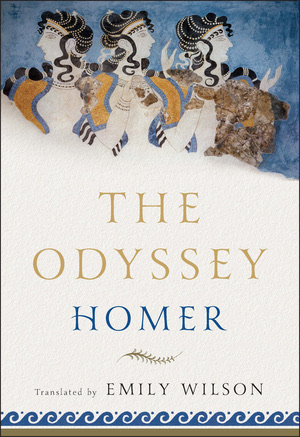
Exact edition
The Odyssey
- Publisher
- W. W. Norton
- Format
- Paperback
- ISBN-10
- 0393356256
- ISBN-13
- 9780393356250
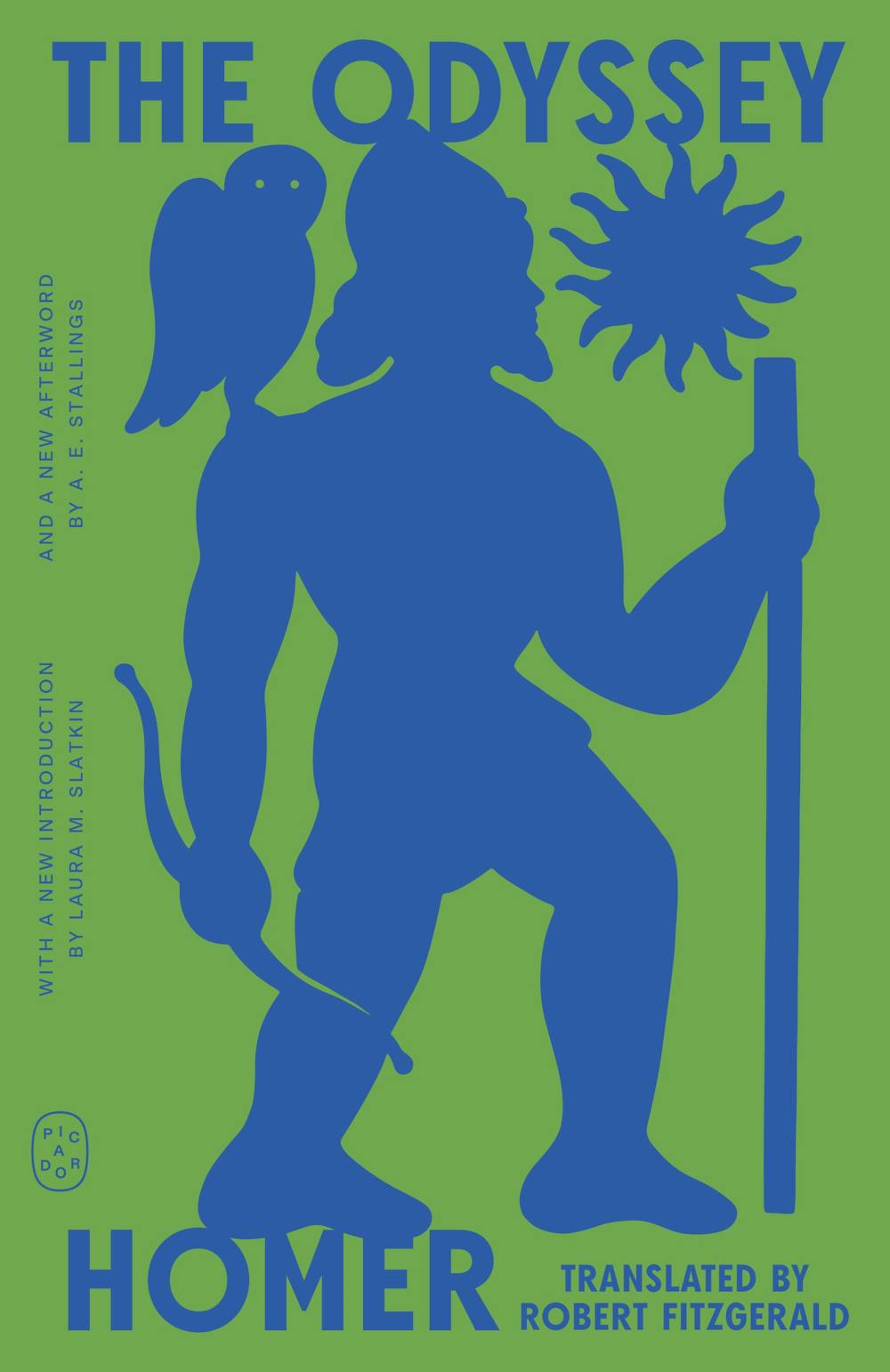
Exact edition
The Odyssey: The Fitzgerald Translation (Deluxe Edition)
- Publisher
- Picador
- Format
- Paperback
- ISBN-10
- 1250375444
- ISBN-13
- 9781250375445